Table Olives
Green Olives, Pitted
Whole · pitted
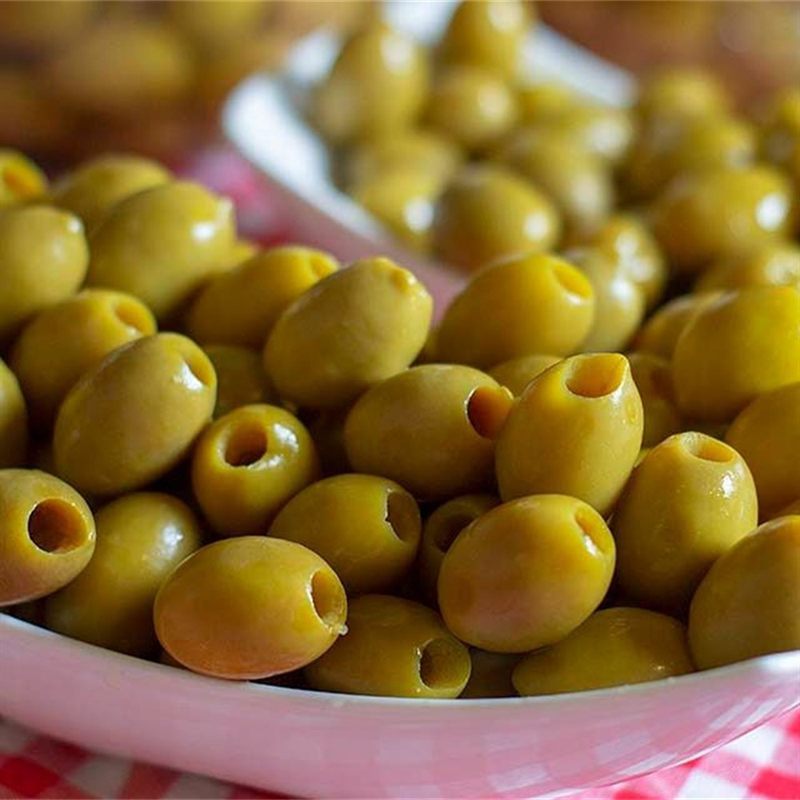
Whole green olives with the stone removed, ready to serve. The same firm, crisp olive without the awkward step at the table — for salads, for starters and for children.
Out of stock
How to use it
Stuff them with roast pepper, almond or cheese and you have a starter in five minutes. They also work chopped fine into an olive butter, spread on warm bread.
Frequently asked questions
How do I keep olives once opened?
In the fridge and, most importantly, completely covered by their own brine. The brine is not packaging, it is the preservative: olives left in the air soften, lose colour and spoil quickly. If the liquid no longer covers them, top it up with lightly salted water (a teaspoon per 200 ml). Always take them out with a clean spoon, never with your fingers. The stafidita olives do not sit in brine — keep those in a closed jar somewhere cool.
How much salt do olives contain?
Laboratory analysis shows 5.66 g of salt per 100 g of olives. That is a lot by weight, but nobody eats 100 g at once: five or six olives is around 20 g, so roughly 1.1 g of salt. If you are watching your sodium, rinse them briefly under cold water before serving — they lose some salt without losing their flavour. Olives are food to enjoy in small quantities, not a snack to eat by the handful.
What is the difference between green and Kalamata olives?
Mainly when they are picked. Green olives are harvested before they ripen: firm, crisp, with a fresher and grassier taste. Kalamata are picked ripe, which is where the deep purple-black colour, the meaty flesh and the rounder, fruitier flavour come from. Neither is better than the other — green olives hold up better with cheese and in salads, Kalamata work better in cooked dishes and on a meze plate.
Why are the stafidita olives wrinkled?
Because they dry naturally in the sun, without brine. Greeks call them stafidita, from σταφίδα — 'raisin' — because they shrivel on the tree exactly as grapes do when they become raisins. Drying draws out the water and leaves the flavour concentrated behind, which is why they are the most intense olives in the shop. Use fewer than you think: a few beside cheese, or chopped into a stew where they melt and deepen the sauce.
Pitted or whole — which is better?
Whole olives taste better and keep longer. The stone protects the flesh, so the olive stays firm and holds its aroma better in brine. Pitted ones are far more practical though: for salads, pasta, pizza or for children you do not want to be counting stones on the plate. The choice is between flavour and convenience, and for cooking convenience wins nearly every time. The sliced ones go straight over the food with no chopping at all.
Are olives a healthy snack?
Olives have been part of the Mediterranean diet for thousands of years and are a natural food, traditionally fermented, with no additives. Per 100 g they carry 221 kcal and 4 g of fibre, and their fat is largely unsaturated, like the oil's. We cannot tell you they treat or prevent anything — the law does not allow it and it would not be true. What we can tell you is what they contain and how salty they are; the rest depends on what the whole table looks like.